
Home Energy Assessments, Explained.
A professional home energy assessment is an expertly designed roadmap to lower bills and a more comfortable home. Here's what actually happens during one, how to prepare, how to choose a qualified assessor, and what the report tells you — summarized from U.S. Department of Energy guidance.
What Is a Professional Home Energy Assessment?
Also called a home energy audit, it's a detailed examination of your home by a trained professional with industry-recognized credentials. The assessor measures how your home uses — and wastes — energy, then recommends the improvements that will save the most, in the right order.
Unlike a quick visual inspection, a professional assessment uses calibrated diagnostic equipment — blower door fans, infrared cameras, furnace efficiency meters, and surface thermometers — to find problems you can't see: air leaks behind walls, insulation voids, and ductwork losing conditioned air into the attic.
- Pinpoints where heated and cooled air escapes your home
- Separates building problems from usage habits
- Produces a prioritized, written upgrade plan — not a sales pitch
What Happens During the Assessment
A thorough professional assessment combines an interview, an inspection, and instrumented testing. Plan to be home for it — walking through with the assessor is the best way to understand your house.
Utility Bill & Usage Review
The assessor analyzes 12 months of energy bills and asks about your habits — thermostat settings in summer and winter, how many people live in the home, which rooms get used, and whether anyone is home during work hours. Usage patterns often reveal easy savings before any equipment comes out.
Room-by-Room Walkthrough
A physical inspection of the whole house: attic and wall insulation levels, window count and condition, exterior wall area, HVAC equipment age, water heater, and visible problem areas like condensation or drafts. Walk along and ask questions — a good assessor explains as they go.
Blower Door Test
A calibrated fan is mounted in an exterior door frame and depressurizes the house, pulling outside air in through every crack and gap. This measures your home's total air leakage rate and pinpoints exactly where sealing and weatherstripping are needed.
Thermographic (Infrared) Scan
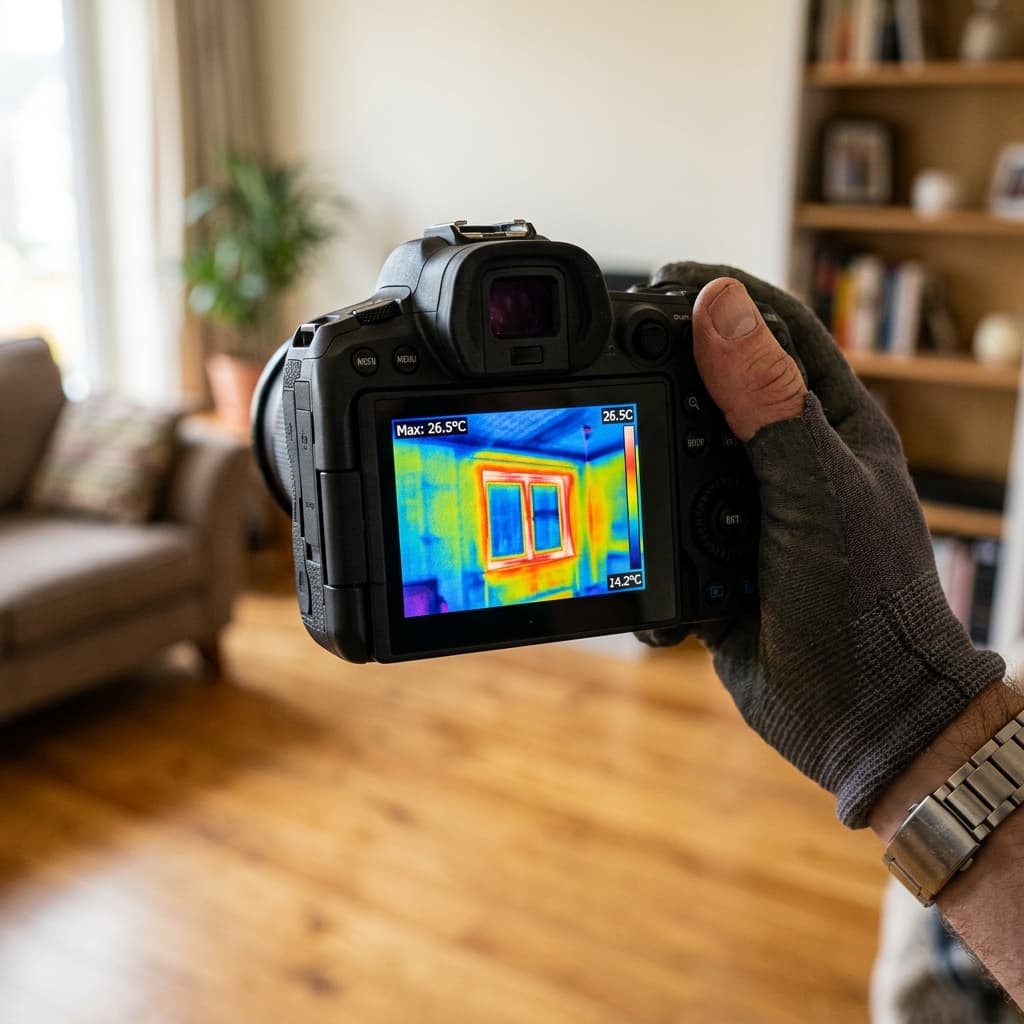
An infrared camera maps surface temperatures across walls, ceilings, windows, and doors, making missing insulation, thermal bridges, and hidden drafts visible as hot or cold spots — without opening up a single wall.
The Report & Roadmap
You receive a written report characterizing how your home performs and a prioritized list of improvements — what to fix first for the biggest savings, and what can wait. Think of it as an expertly designed roadmap to lower bills and better comfort.
How to Prepare for Your Assessment
A little homework makes the assessment sharper. The assessor will combine your notes and bills with their measurements to tell building problems apart from habits — and find the simple wins first.
- Make a list of existing problems: condensation, drafty rooms, spaces that never feel comfortable
- Gather copies or a summary of the last 12 months of energy bills
- Know your typical thermostat settings for summer and winter
- Note how many people live in the home and whether anyone is home during working hours
- Identify which rooms you actually use day to day
- Write down questions as you think of them — the walkthrough is your chance to ask
How to Choose a Qualified Assessor
Verify certifications
Look for credentials from a DOE-recognized certification program, such as RESNET or the Building Performance Institute (BPI), or a DOE Home Energy Score Certified Assessor.
Ask about diagnostic tools
A professional assessment should include calibrated equipment — blower door testing and thermographic inspection — not just a visual walkthrough.
Check references & reputation
Ask for multiple references and contact them, and check the Better Business Bureau for unresolved complaints before hiring.
Ask what you'll receive
Confirm you'll get a written report with prioritized recommendations — and ask whether they provide a Home Energy Score so you can benchmark your home.
Your state energy office and your utility company are also good starting points — many utilities conduct assessments themselves or maintain lists of qualified local auditors.
What Assessments Typically Recommend
The right mix depends on your equipment's age, the local climate, and your goals — but most reports draw from the same playbook, ordered from cheapest fix to biggest project.
Whole-home air sealing
Closing leaks and gaps to cut drafts — usually the cheapest fix with the fastest payback.
Insulation upgrades
Adding attic, wall, or foundation insulation where the scan shows gaps or thin coverage.
Duct sealing & insulation
Sealing leaky ductwork running through attics, crawlspaces, and other unconditioned spaces.
Heating & cooling efficiency
Tuning, repairing, or replacing aging HVAC and water heating equipment with high-efficiency units.
Smart thermostats & controls
Smart thermostats, LED lighting, and smart power strips that trim everyday consumption.
Solar & electrification
Once the home is efficient: solar panels, battery storage, ENERGY STAR appliances, or EV charging.
Moisture & ventilation fixes
Remediation and ventilation improvements that protect air quality alongside efficiency.
Window & door improvements
Weatherstripping, storm windows, or replacements where the audit shows major losses.
Efficiency first, then generation. Sealing and insulating before adding solar means you can often install a smaller, less expensive system to cover your usage — the audit tells you exactly how much house to fix first.
Home Energy Assessment FAQs
Common questions homeowners ask before booking an energy audit.
What is a professional home energy assessment?
A professional home energy assessment (also called an energy audit) is a detailed inspection by a trained, credentialed assessor that identifies where your home wastes energy and which improvements will save the most. It combines a room-by-room inspection, a review of your past utility bills, and diagnostic testing like blower door tests and infrared thermal scans, and ends with a written report of prioritized recommendations.
How long does a home energy assessment take?
Most whole-home assessments take about 1.5 to 2 hours, depending on the size and complexity of the home. Larger homes or homes with multiple HVAC systems can take longer.
How much does a professional home energy audit cost?
Independent professional audits commonly run a few hundred dollars, and some utilities offer free or discounted assessments to their customers. Zenergy Home offers a complimentary in-home energy audit — normally a $400 value — with no obligation, across Pennsylvania, New Jersey, Delaware, and Maryland.
What is a blower door test?
A blower door is a powerful calibrated fan mounted in an exterior door frame. By depressurizing the house, it draws outside air in through every crack and gap, which lets the assessor measure your home's overall air leakage rate and locate exactly where air sealing is needed.
What is a thermographic inspection?
A thermographic inspection uses an infrared camera to map surface temperatures across your walls, ceilings, windows, and doors. Cold or hot spots reveal missing insulation, thermal bridging, and hidden drafts that are invisible to the naked eye — without any demolition.
How should I prepare for an energy assessment?
Make a list of existing problems like drafty rooms or condensation, gather a year of energy bills, and be ready to discuss how you use the home — typical thermostat settings, how many people live there, and which rooms get used. This context helps the assessor separate building problems from usage habits.
Is a home energy audit worth it?
For most homes, yes. The assessment replaces guesswork with measurements, so you invest in the upgrades that actually move your bills — typically air sealing and insulation first, then equipment. Many homeowners uncover savings opportunities of 10–40% on energy costs, depending on the home's age and condition.
This guide summarizes recommendations from the U.S. Department of Energy's Energy Saver program.
Ready to See Where Your Home Is Wasting Energy?
Zenergy Home performs professional in-home energy audits — thermal imaging, blower door testing, and a written action plan — completely free across PA, NJ, DE, and MD. No pressure, just measurements.