
Seal in comfort.
Stop the energy drain.
High-performance attic insulation and air sealing form the foundation of a comfortable home. Stop conditioned air from escaping, balance indoor temperatures, and drop your utility bills.
- Reduce heating and cooling utility costs by up to 20-30%
- Eliminate hot and cold spots throughout your second floor
- Prevent moisture accumulation, mold growth, and winter ice dams
Insulation Products We Install
We customize our attic solutions based on your home structure and target performance goals.
Blown-In Cellulose
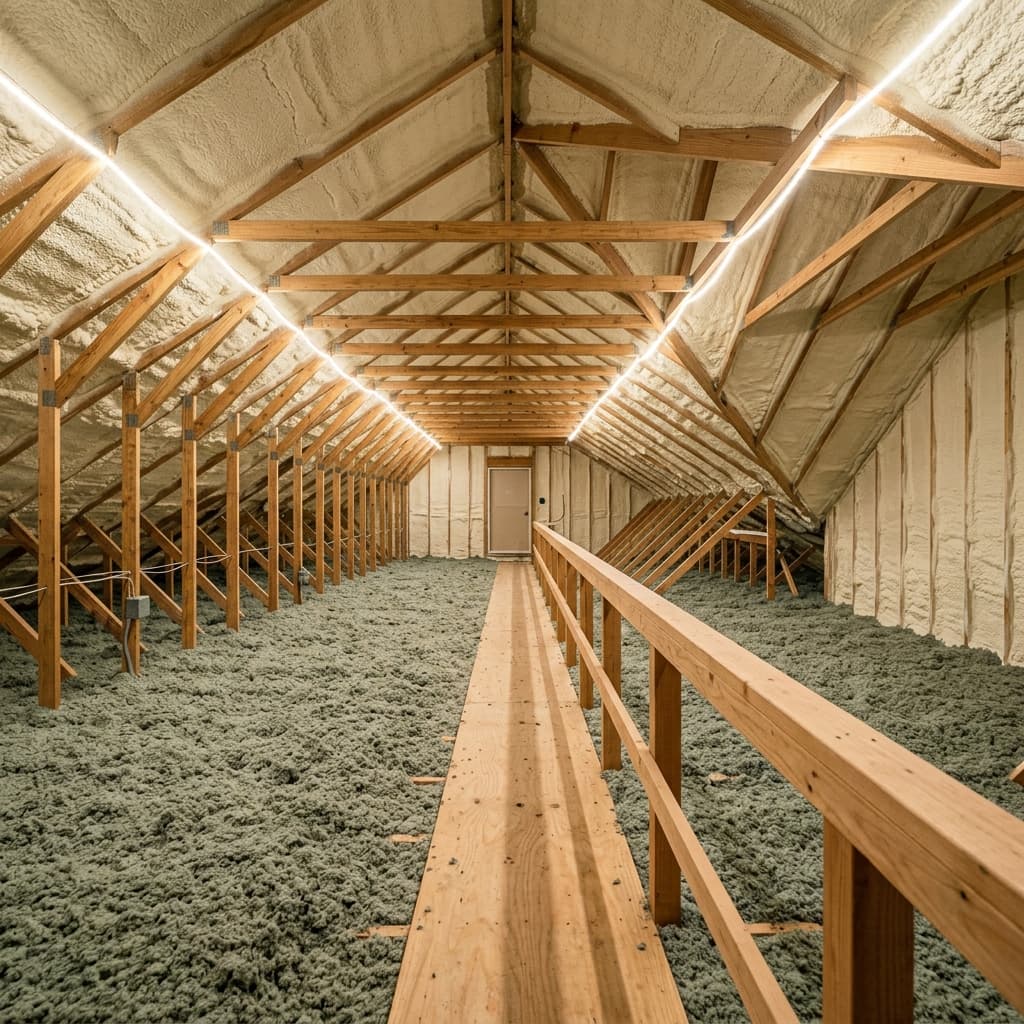
Eco-friendly, fire-resistant cellulose material blown onto your flat attic floor. Reaches high R-values (thermal resistance) to create a thick thermal blanket over your living spaces.
Spray Foam Insulation
Applied directly between the roof rafters. Closed-cell or open-cell spray foam expands to seal air leakages completely, converting your attic into a clean, dust-free conditioned area.
Attic Air Sealing
Before we insulate, we find and seal draft pathways around recess lighting, chimney chases, drywall top plates, and plumbing stacks using fire-rated expanding foam.
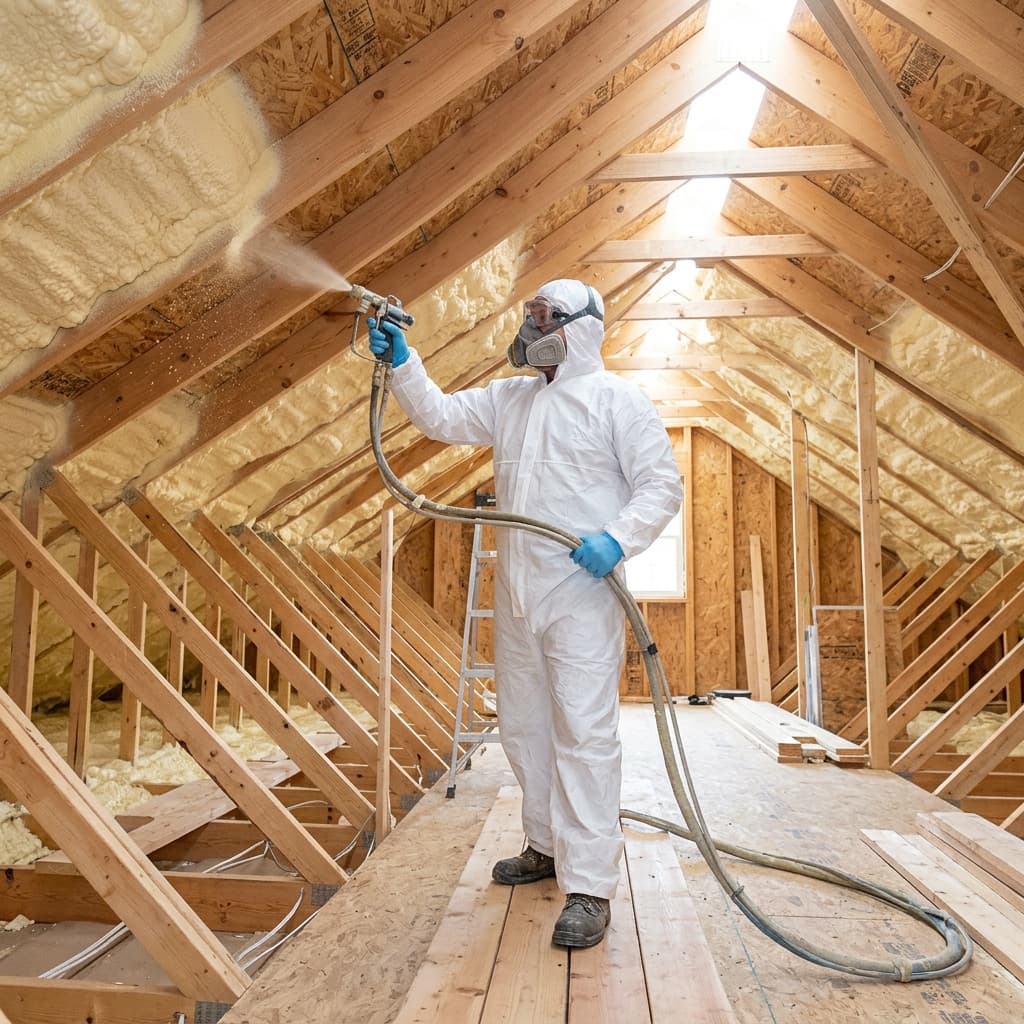
Attic Air Sealing & Insulation Process
Adding new insulation on top of dirty, unsealed attic floors can cause issues. Our crews prepare your space: vacuums out old contaminated material, seals every open junction box and ceiling crack, installs ventilation baffles, and then adds fresh premium insulation.
Insulation FAQs
Common insulation and home envelope questions answered by our crew.
How does attic insulation save money?
Heat naturally rises. In winter, if your attic isn't sealed and insulated, heated air escapes into the attic and out the roof. In summer, attic heat (which can reach 150°F) radiates down into your living spaces, forcing your air conditioner to run constantly.
What is attic air sealing?
Air sealing is the process of using expanding foam and caulking to plug holes around wire pathways, light fixtures, pipes, and chimney vents in your attic floor. Air sealing must be completed *before* laying down new insulation to prevent draft paths.
What is the difference between spray foam and blown-in insulation?
Blown-in cellulose is made from recycled paper treated for fire resistance and is excellent for laying on flat attic floors. Spray foam creates an airtight seal directly against the roof underside, converting the attic into a conditioned, clean space.
Does insulation qualify for tax credits?
Yes! Under section 25C, homeowners can claim a 30% federal tax credit for insulation and air sealing materials up to a maximum of $1,200.
Ready to Seal Your Attic?
Fill out the form to request a free insulation estimate. A Zenergy insulation specialist will review attic photos, measure space dimensions, and calculate tax credit savings for an airtight home upgrade proposal.